 family owned and operated for 40 years
How to Get Rid of Ground Ivy (Creeping Charlie) on Your Calgary Lawn
You’re walking across your lawn when you notice a patch of small green leaves spreading through the grass. A few weeks later, that little patch seems to be everywhere. Chances are, you’ve met Creeping Charlie.
Also known as Ground Ivy, Creeping Charlie is a stubborn perennial weed that can quickly work its way across Calgary lawns. Once established, simply pulling a few leaves usually won’t cut it. If you want to rid yourself of ground ivy (Creeping Charlie) for good, it helps to understand why this weed is so persistent and what you can do about it.
At Greener Grass, we know how frustrating stubborn weeds can be, so we’re breaking down how to identify it, why it keeps coming back, and how the right weed control approach can help you manage it while keeping your lawn healthy.
What Is Ground Ivy?
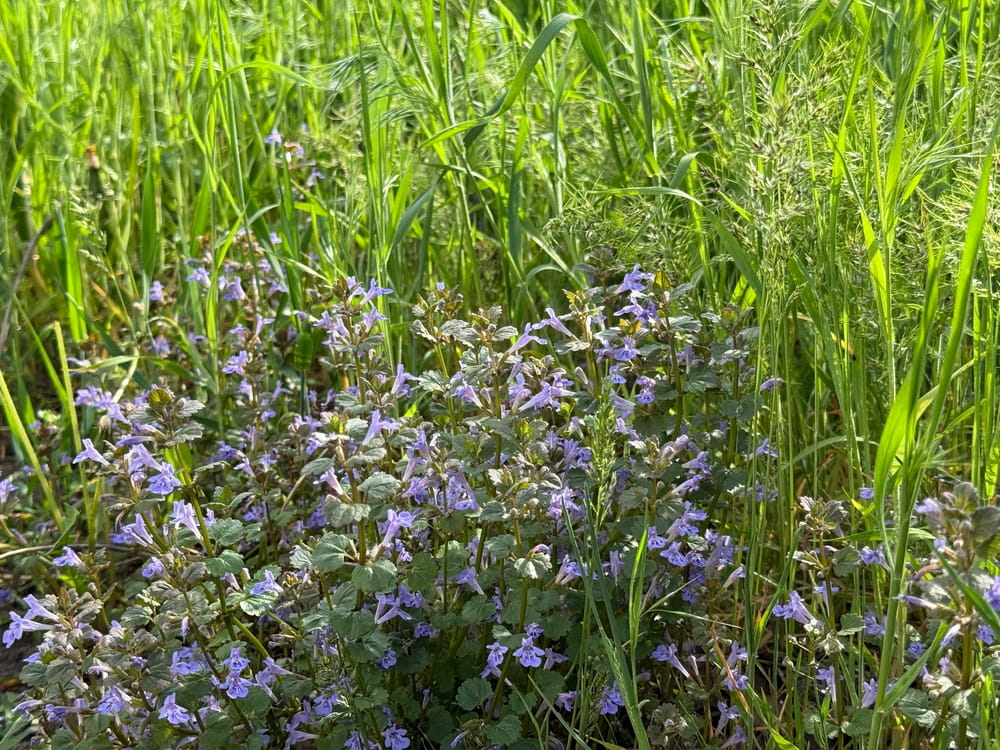
Ground Ivy is a low-growing perennial weed with rounded, scalloped leaves and small purple-blue flowers. It spreads through creeping stems called stolons, which can develop roots wherever they touch the soil.
That spreading habit is what makes it such a pain in the grass! What looks like one plant may actually be connected to a much larger network running throughout your lawn.
It tends to thrive in moist, shady areas where turf is already struggling, but it can spread into sunnier parts of the yard once established, making it even more important to get rid of Ground Ivy (Creeping Charlie) before it takes over more of your lawn.
Why Is Ground Ivy So Hard to Get Rid Of?
Pulling it by hand can work for small patches, but you need to remove the entire plant, including its roots and runners. Leave pieces behind, and there’s a good chance they’ll start growing again. Mowing alone won’t solve the problem either. Because Ground Ivy grows close to the ground, your mower may barely touch it.
The longer it’s allowed to spread, the harder it becomes to remove. That’s why catching it early and using the right weed control approach can save you plenty of frustration later.
How to Rid of Ground Ivy (Creeping Charlie)
For small patches, carefully hand-pull or dig out the plants while the soil is moist, making sure you remove as much of the root system and runners as possible. Keep checking the area afterward for any regrowth.
For larger infestations, targeted weed control is often more practical. Creeping Charlie can require repeated treatments rather than a single application, especially when it has become well established.
Timing matters too. Treatments work best when the plant is actively growing and able to absorb the product through its leaves and transport it into the root system. Always follow product directions or leave treatment to a professional lawn care provider.
Help Your Lawn Fight Back
Getting rid of Creeping Charlie is only half the battle. If the conditions that allowed it to thrive remain, it can eventually return.
Focus on building thicker, healthier turf through proper fertilization, overseeding, aeration, mowing, and watering. If shady or consistently wet areas are the problem, improving drainage or adjusting your lawn care routine may also help. Dense turf leaves fewer open spaces for Ground Ivy and other weeds to sneak in.
Don’t Let Creeping Charlie Take Over the Yard!
Getting rid of ground ivy can take patience, especially once it has spread across a large part of your yard. The good news is you don’t have to spend your summer chasing runners around the lawn.
At Greener Grass, our professional weed control services are designed around Calgary lawns and the weeds that love calling them home. We’ll help target unwanted weeds while supporting a thicker, healthier lawn that’s better equipped to keep them from coming back.
Check out our plans online or give us a shout today to show Creeping Charlie who actually owns the yard!